
Most car cup holders measure between 2.5 and 3.5 inches wide and about 2 to 3 inches deep. That sounds simple enough. But the real trouble starts when your favorite tumbler slides, jams, or tips over on the first sharp turn. That is why measuring the exact cup holder size in car spaces matters more than people think.
A travel mug may fit at the rim but stop halfway down. A Stanley tumbler may drop in, then wobble like a loose shopping cart wheel. Small details matter here.
In this blog, let’s see how to measure your car cup holder size for a snuggly fit for your tumblers and cups.
What the Cup Holder Size in Car Actually Means
Your center console holder and your door holder are not the same size.
Most standard car cup holders sit near 3.15 inches wide with depth usually landing around 2.25 inches. But car makers rarely follow one exact number. A compact sedan may have tight holders built for slim coffee cups. On the other hand, a pickup truck may have deep wells built for giant gas-station tumblers.
The shape matters too. Many holders taper inward near the base. The top opening looks wide, but the bottom gets tighter. That catches people off guard all the time. A bottle slides halfway down, then stops cold.
European cars often run smaller than American models. That surprises SUV drivers who switch brands. And no, there is no universal ISO rule for all cup holders. Every console has its own quirks.
Why Measuring Wrong Causes Wobbly Drinks (and Spills)
The diameter is not the measurement that causes spills but the depth is.
A cup can fit the opening perfectly and still wobble like crazy. Why? Because shallow holders let tall bottles lean too high above the rim. Hit one pothole and the drink tilts sideways, and that is the real issue.
Think about a 40-ounce tumbler. The base may fit a 3.2-inch opening which is great. But if the holder depth is only 2 inches, most of the weight stays above the console. Every bump turns the cup into a tiny pendulum.
Rubber tabs change things too. They grip the cup walls for stability, but they also shrink the usable width inside the holder. If you ignore those tabs, your measurements become useless fast.
Many drivers blame width first, but they should actually check depth first.
The 10 Tips to Measure Your Car Cup Holder Correctly
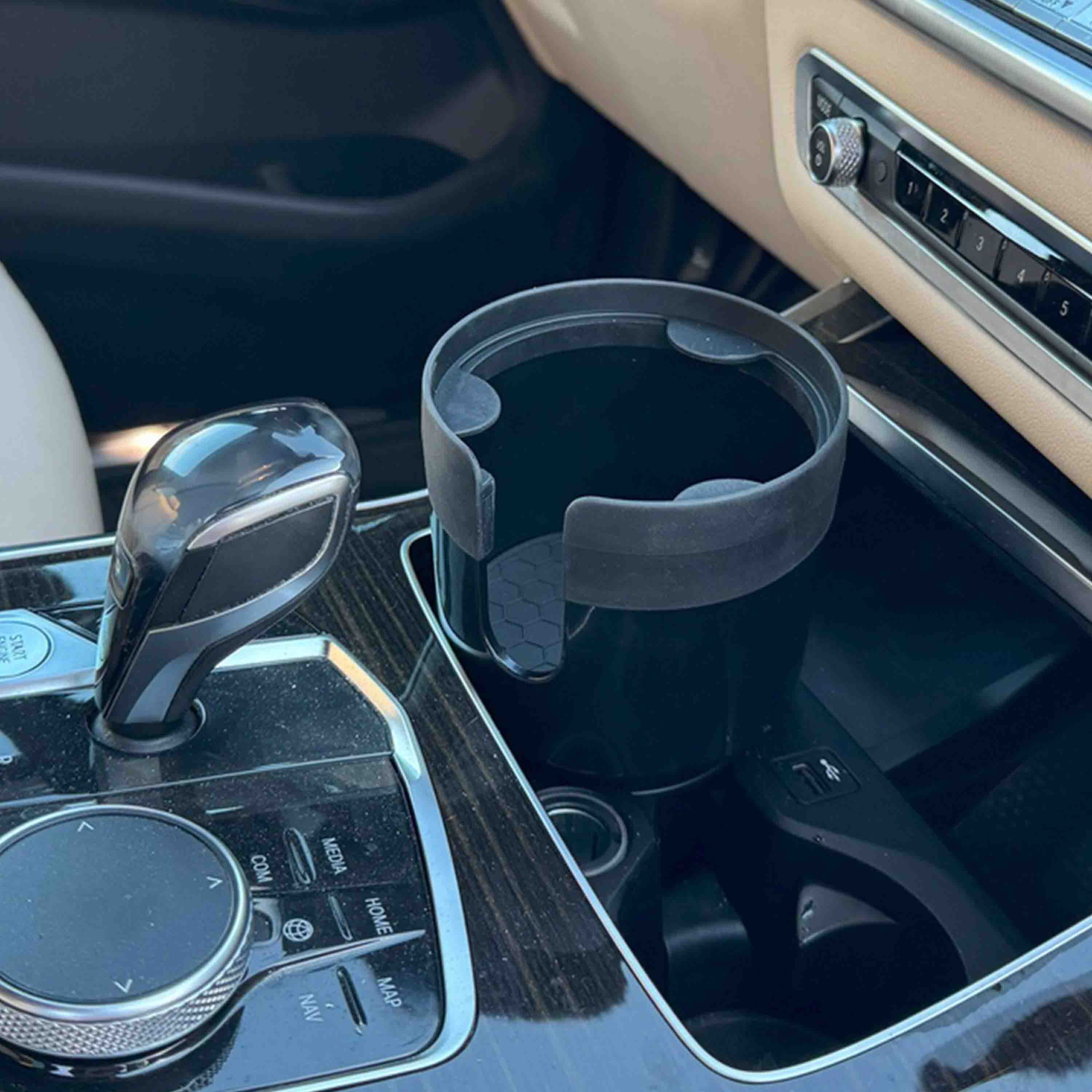
Grab a tape measure before buying a new tumbler or insert. Here, a quick guess rarely works. Most failed fits happen because drivers measure the top rim only and ignore the taper lower down.
While it’s important to measure your car cup holder, brands like Cozy Cup Holder offer cup holder expandables that make it easy for you to keep your cups and tumblers in place without any wobbling.
Still, here are the tips that actually matter when measuring your holder.
1. Use a flexible tape measure
A soft tape measure drops deeper into the holder, while a stiff metal ruler often sits awkwardly on the rim. That gives false numbers. If you want to measure the cup holder, do it with sewing tape. It works well here.
2. Measure the narrowest point inside
Most holders widen near the top, and the tightest spot usually sits lower down. That is the number you need. Not the rim opening.
3. Leave a small clearance gap
Subtract about 0.1 to 0.2 inches from your width measurement. Why? Because cups need wiggle room. A perfect-size match often sticks or squeaks during removal. Keep a tiny buffer for better fit.
4. Check rubber grips and spring tabs
Many modern holders use rubber fins for grip. Press them inward gently before measuring, otherwise your usable opening shrinks without warning.
5. Measure depth straight down
Do not angle the tape diagonally. Measure from the top rim directly to the base and in a straight line only. This is how you learn how deep a car cup holder really is.
6. Measure the cup base, not the body
Large tumblers fool people all the time. The body may bulge wider near the top while the base stays slim. The base controls the fit, not the widest section. This is an easy mistake people make while measuring the cup base.
7. Measure inserts in resting position
Some holders have flexible wings or removable liners. Measure them exactly as they sit during normal driving. Pulling them aside changes the real-world size creating bad numbers.
8. Check every holder in the car
Front console holders and door holders often differ in size. Rear-seat holders may differ again. One bottle may fit perfectly up front but wobble badly in the back seat. It’s important to measure all of them.
9. Write down diameter and depth together
People remember one number and forget the other. Width without depth tells only half the story. Keep both numbers saved in your phone before shopping.
10. Test-fit your actual cup first
Flat measurements miss odd shapes sometimes. Some holders have square bottoms or uneven walls, while others tilt slightly toward the driver. This may sound a bit weird but it matters.
Common Cup Sizes and Whether They Fit Standard Holders
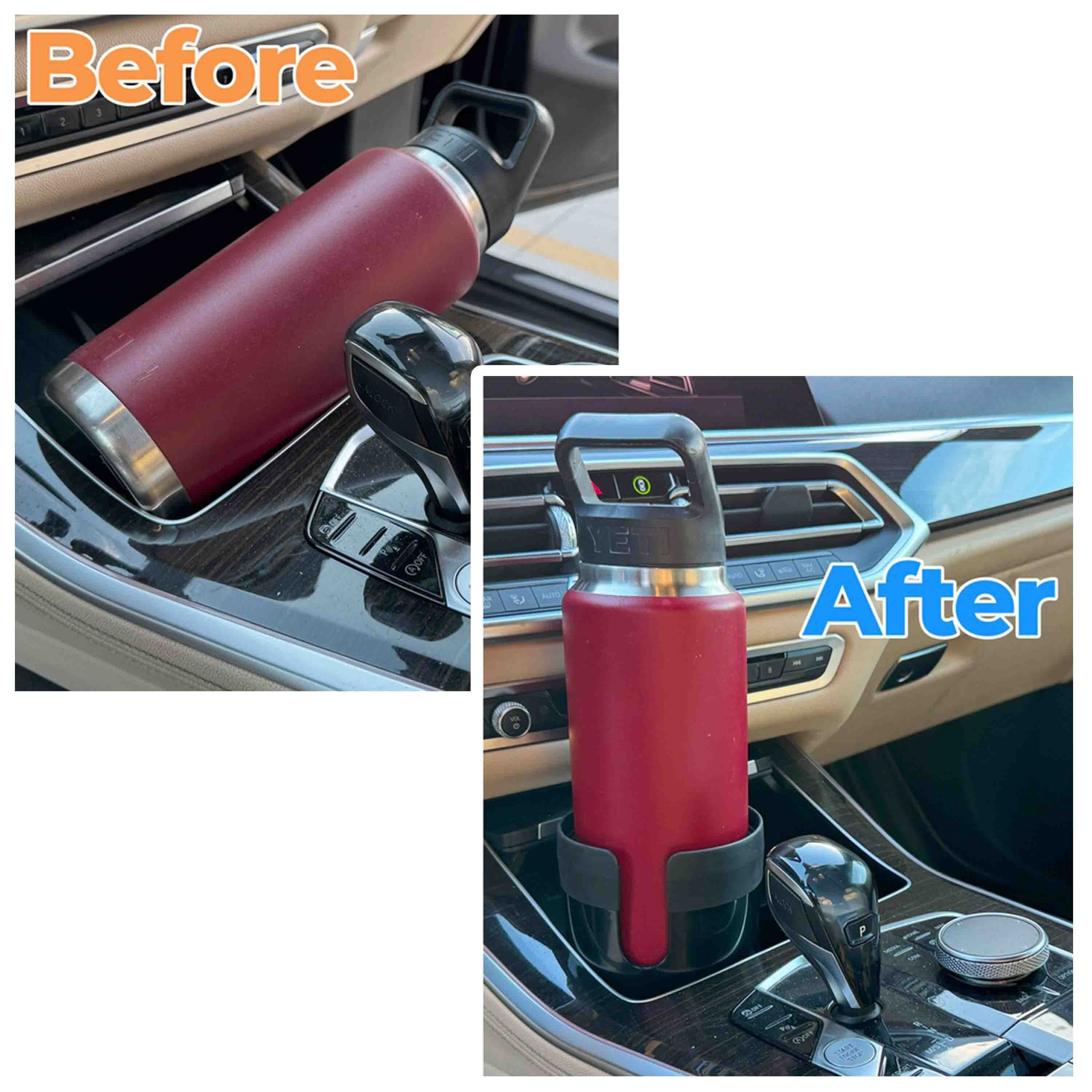
As of 2026, the Stanley 40 oz Quencher still causes problems in many standard holders because its base sits around 3.26 inches wide. Many factory holders stop near 3.15 or 3.2 inches. That tiny difference sounds harmless. It is not.
Here is how several popular cups compare against a standard holder:
- Stanley 40 oz Quencher. Base about 3.26". Often needs an expander.
- Hydro Flask 32 oz bottle. Base about 2.9". Fits most standard holders.
- Standard Starbucks tall cup. Base about 2.4". Fits easily.
- Standard 12 oz soda can. Diameter about 2.6". Fits nearly all holders.
- YETI Rambler 20 oz. Base about 3.0". Usually fits standard holders.
Some oversized trucks and SUVs handle giant tumblers with no issue. Compact cars struggle more, especially older models. That gap keeps growing as bottles get larger every year.
When Your Cup Holder Size Doesn't Match. What to Do
Not every fix works for every cup holder problem. Using the wrong one wastes money.
If your holder is too narrow, an expander ring or silicone insert may help. Many silicone insert options cost under $15 on major retail sites. That is the cheap fix but only if width is the issue.
If the holder is deep enough but your bottle rattles, a rubber sleeve often solves it. Soft inserts create friction and stop side-to-side movement. This works well for skinny cans or slim coffee cups. Quick upgrade.
But shallow holders are harder to fix. A tall tumbler sitting high above the console stays unstable no matter how snug the width feels. In those cases, vent-mounted holders or console trays work better. Some drivers even switch bottles instead of forcing the problem.
Brands like Cozy Cup Holder offer practical solutions for oversized tumblers and awkward factory holders. Their lineup includes adjustable cup holder expanders built for larger bottles that standard holders cannot handle well. These help drivers avoid the classic wobble-and-spill problem without replacing the full console setup.
Three measurements, that’s all you need.
Check the narrowest width, and measure the depth straight down. Leave a tiny clearance gap so the cup slides smoothly. Those numbers tell you more than any product label ever will.
FAQs
Q1: What is the standard cup holder size in car models?
Most standard holders measure between 2.5 and 3.5 inches wide and about 2 to 3 inches deep. Around 3.15 inches is common in many modern vehicles.
Q2: Why does my tumbler wobble even though it fits?
The holder may be too shallow. Tall bottles need depth for stability. A cup can fit the width perfectly and still tip during turns or bumps.
Q3: Should you measure the cup base or the widest part?
Measure the base. The base controls whether the cup slides into the holder correctly. The upper body size matters far less.
Q4: Do rubber tabs affect cup holder measurements?
Yes. Rubber grips reduce the usable width inside the holder. Always press them inward gently while measuring.
Q5: Will a Stanley 40 oz fit a normal car cup holder?
Sometimes. Many standard holders are slightly too small for the Stanley 40 oz Quencher without an expander or insert. That tiny size gap matters more than expected.
